
Kia K4: Maintenance / Air cleaner
Contents:
Replacing the air cleaner filter
To maintain peak engine performance and fuel efficiency in your Kia K4, replace the air cleaner filter whenever it becomes dirty or clogged; do not attempt to wash or reuse the filter element.
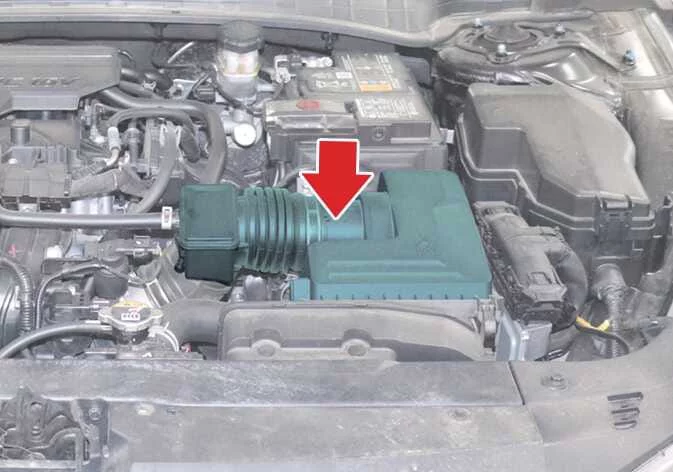
|
During routine inspections of the air cleaner compartment, you may gently remove loose debris from the filter housing, but if the filter media itself is dirty, it should be replaced. If strictly necessary, you may use a low-pressure stream of compressed air to remove surface dust, but avoid damaging the filter pleats.
- Locate the air cleaner housing and pull up on the locking lever to release the cover seal of your Kia K4 intake system.
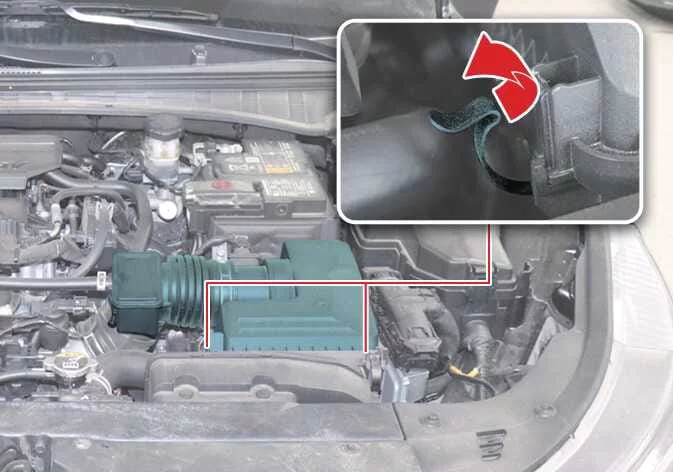
- Lift the air cleaner cover upward to fully expose the internal filter element for inspection or replacement.
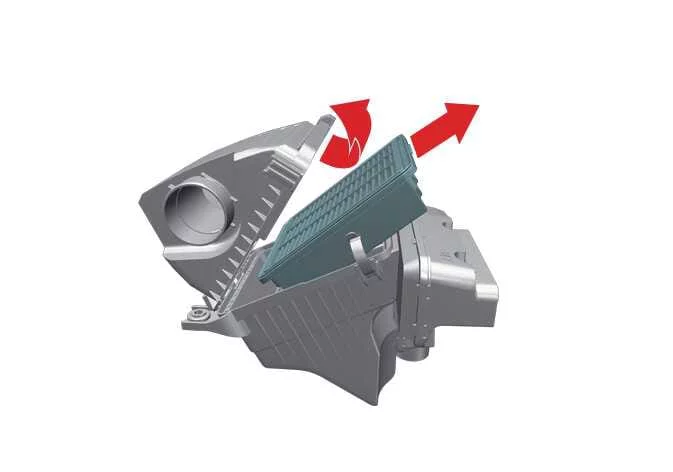
- Carefully remove the old filter and install a fresh, genuine replacement unit.
- Reassemble the filter and the housing cover by performing these steps in reverse order, ensuring the Kia K4 air intake assembly is airtight.
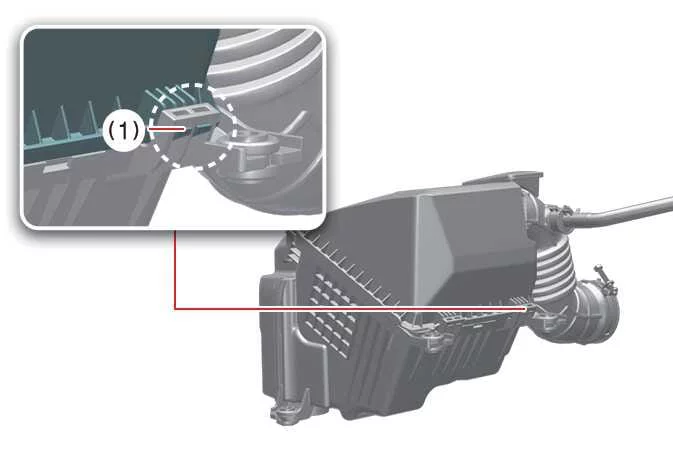
Replace the air cleaner filter according to the intervals listed in your official Kia K4 Maintenance Schedule.
If you regularly drive your vehicle in extremely dusty, sandy, or unpaved environments, you must replace the filter much more frequently than the standard recommended intervals. (Refer to the "Maintenance under severe usage conditions" section of your owner's manual for further guidance.)
NOTE
-
Never drive your Kia K4 with the air cleaner filter removed, as this will lead to severe and immediate engine wear due to unfiltered air intake.
-
When removing the filter, take great care to ensure that no dust or dirt enters the air intake pipe, as debris in the intake can cause catastrophic internal engine damage.
-
Always use genuine Kia replacement parts purchased from an authorized Kia dealer to ensure a proper fit and optimal filtration efficiency.


Other information:
Kia K4 (CL4) 2025-2026 Owner's Manual: Fuel Requirements
To ensure optimal performance and longevity, your new Kia K4 is engineered to operate exclusively on high-quality unleaded fuel. It is highly recommended to use gasoline with a pump octane rating of (R+M)/2 of 87 (which corresponds to a Research Octane Number of 91) or higher. Utilizing the correct fuel grade prevents engine knocking and maintains internal components in peak condition.Kia K4 (CL4) 2025-2026 Owner's Manual: Description and Operation
OBD-II review 1. Overview The California Air Resources Board (CARB) began regulation of On Board Diagnostics (OBD) for vehicles sold in California beginning with the 1988 model year. The first phase, OBD-I, required monitoring of the fuel metering system, Exhaust Gas Recirculation (EGR) system and additional emission related components.